Dr Van Dijk, Senior Researcher in "The Global War on Civilians" project, examines the interwar period as a formative moment in the development of modern norms for civilian protection, showing how international law evolved amid the rise of blockade, bombing, and economic warfare.
Dr van Dijk explores the interwar years as a crucial yet often misunderstood period in the history of civilian protection. In this lecture, the interwar period is explored as a formative era that forged the modern framework for civilian protection, even as civilians became primary targets of indiscriminate warfare through economic sanctions, blockades, and aerial bombardment.
Rather than simply reiterating E.H. Carr’s claim of international law’s “failure,” this period is presented as a crucible in which key concepts such as civilian immunity, proportionality, military objectives, civilian objects, and the right to humanitarian assistance were first articulated, conceptualized, contested, and globalized—though unevenly designed, practiced, and enforced.
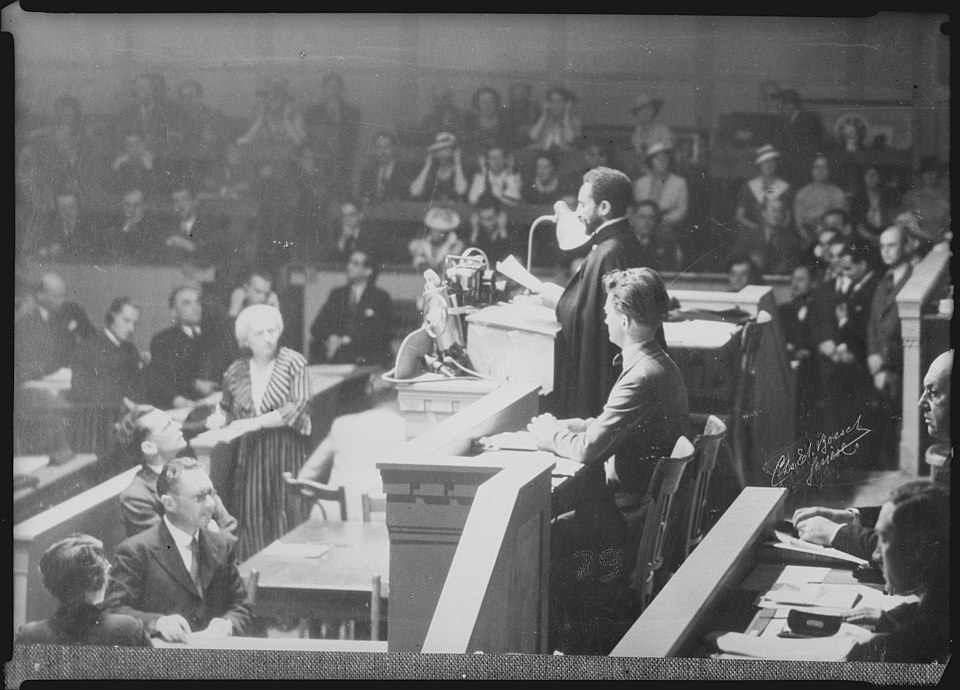
From Haile Selassie’s dramatic 1936 appeal to the League of Nations to international outrage over Guernica, Shanghai, and Addis Ababa, international law provided states, activists, and organizations with a powerful vocabulary for justification, condemnation, and mobilization. This emerging legal language proved strategically crucial by establishing expectations of restraint that, while sometimes violated, could never be entirely dismissed.
Despite their importance, these early norms remained fragile, hierarchical, and exclusionary—often in more complex ways than current historiography suggests. The interwar legacies of regulating blockade and bombing—as protective shields, weapons, and tools of legitimacy—continue to shape contemporary debates on civilian targeting, sieges, and starvation.